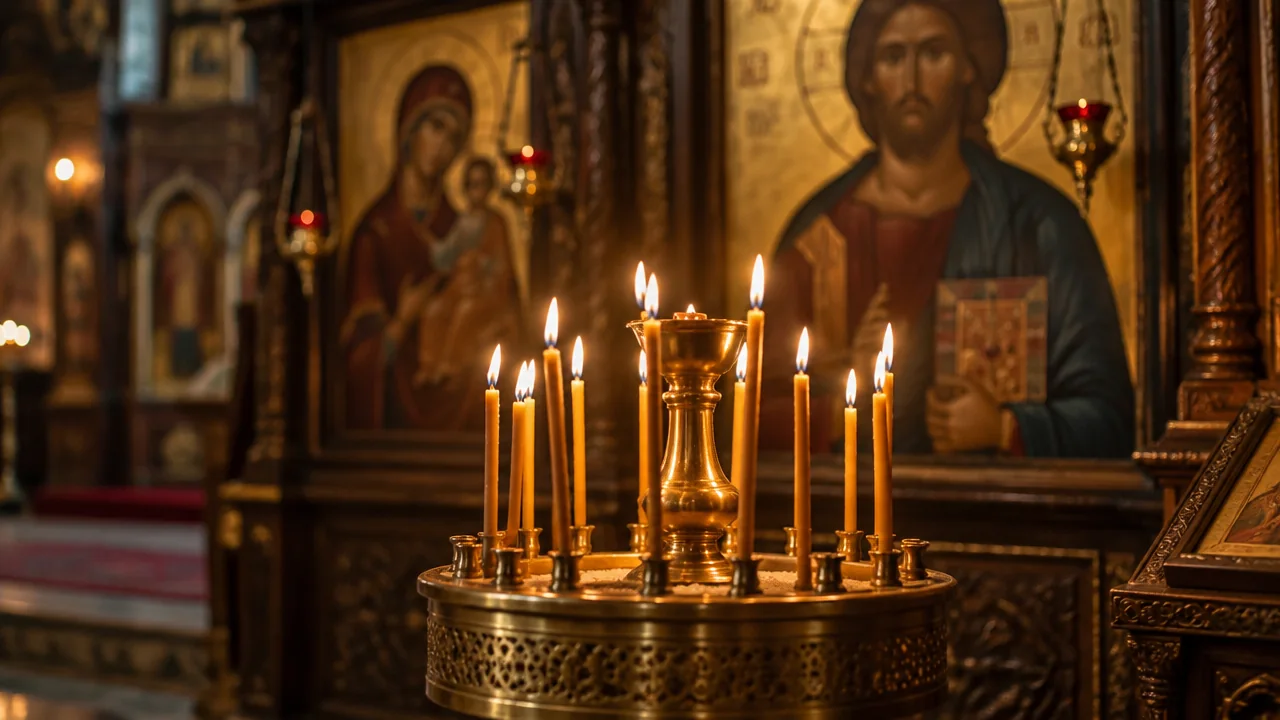
St. Anthony the Great
On 17 January each year, the Orthodox Church honours St. Anthony the Great. Known in Bulgarian as Antonovden, the day commemorates an Egyptian ascetic of the third and fourth centuries who is regarded as the father of monasticism.
As a young man, Anthony gave away his property and withdrew into the desert, where he lived a life of prayer and fasting. Disciples gathered around him, laying the foundations for monastic life.
Folk Beliefs and Customs
In Bulgaria’s folk calendar, Antonovden is celebrated together with Atanasovden, St. Athanasius’s Day, on 18 January. The two days are known together as Lelinden or Atanasovtsi. According to folk legend, Anton and Atanas were brothers and blacksmiths who forged the first pair of tongs.
Traditional beliefs regarded both days as dangerous because of illness. Women refrained from sewing, washing clothes and spinning. They also made small round loaves, spread them with honey and gave them away in a custom associated with warding off plague and smallpox. These folk practices sit alongside the church’s commemoration of the saint.
Name Day and Working-Day Status
Antonovden is a name day for people called Anton, Antonia, Andon, Antoaneta, Toni and Tonya, as well as those with related names. A name day is a celebration associated with a person’s given name.
St. Anthony’s Day is not a public holiday: it is a normal working day in Bulgaria.