Baba Marta and the coming spring
Baba Marta is celebrated every year on 1 March. In Bulgarian folklore, she is a temperamental old woman who personifies the month of March. When she smiles, the sun shines; when she becomes angry, snow falls. Her changing moods are the folk explanation for March’s unpredictable weather.
On this day, people traditionally seek to win her favour, hoping she will bring good health and an early spring. The celebration remains one of Bulgaria’s best-loved folk traditions.
Giving and wearing martenitsi
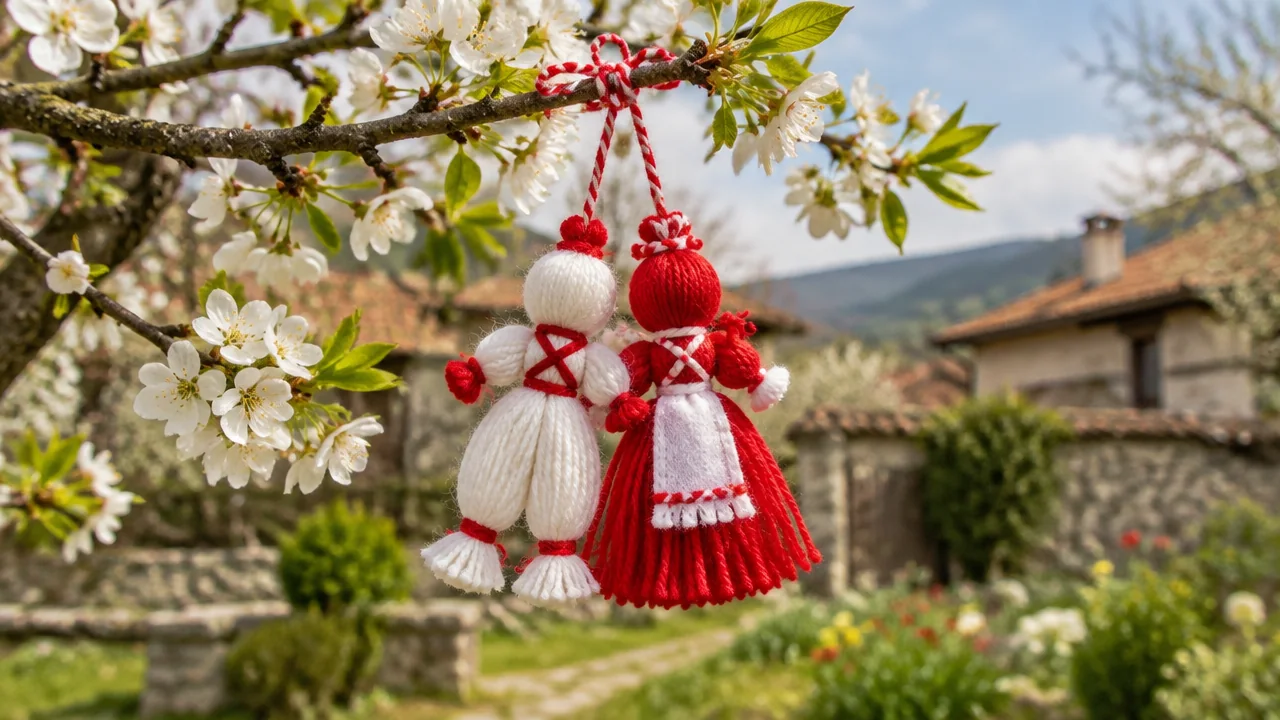
The holiday’s main symbol is the martenitsa: twisted white and red threads, often made into tassels or the figures Pizho and Penda. White represents purity and longevity, while red is associated with health, vitality and the sun.
On 1 March, relatives, friends and colleagues give one another martenitsi, the plural of martenitsa. The customary greeting is “Chestita Baba Marta!”, meaning “Happy Baba Marta!” These tokens are worn on a lapel, around the wrist or around the neck.
Traditionally, a martenitsa is worn until its wearer sees the first stork, swallow or blossoming tree. It is then tied to a flowering branch or placed under a stone. According to folk belief, this brings health and good luck throughout the year.
Older village customs
In the past, the oldest woman in the household would shake out rugs and clothes early on 1 March. She would hang red cloth or yarn at the window and on the fence to drive away illness. Martenitsi were tied not only to children, but also to livestock and fruit trees.
The tradition is included in UNESCO’s list of intangible cultural heritage as cultural practices associated with 1 March, together with Romania, North Macedonia and Moldova.
Is Baba Marta a public holiday?
Baba Marta is not a public holiday or a day off: it is a normal working day in Bulgaria.