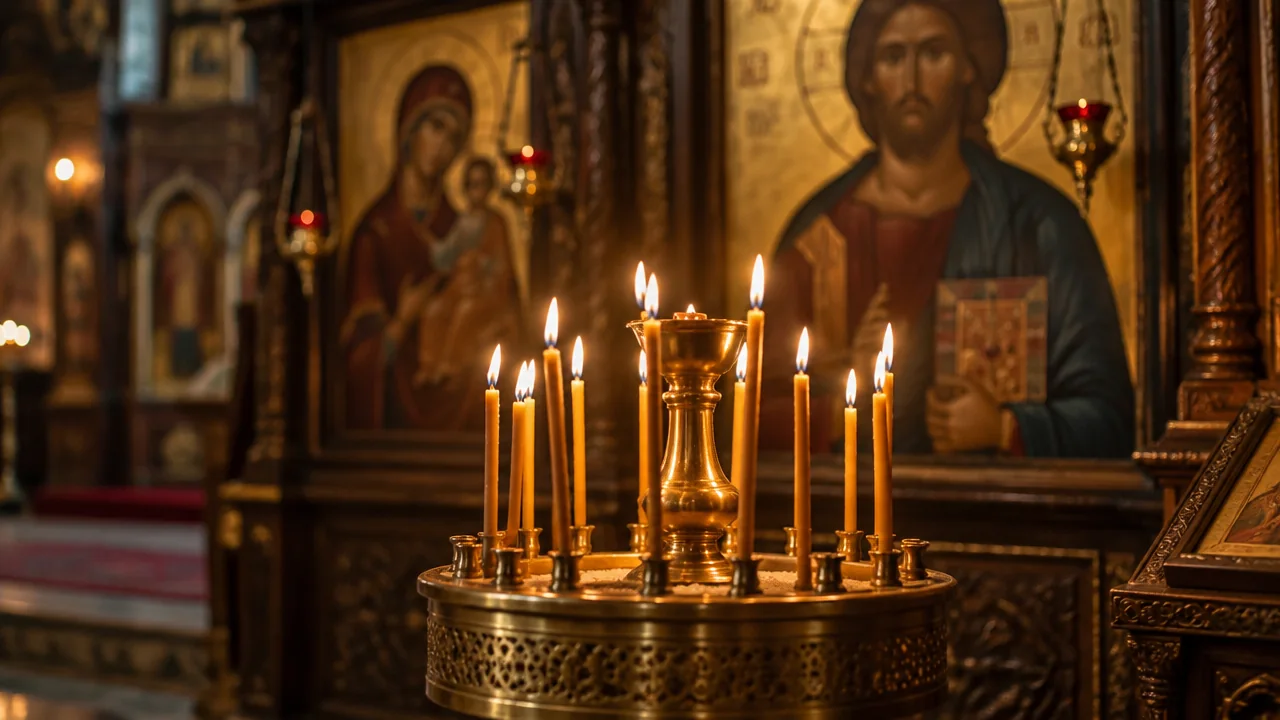
The meaning of Epiphany
Epiphany, also known in Bulgaria as Jordanovden or Bogoyavlenie, is one of the twelve major Christian feasts. Celebrated every year on 6 January, it marks the baptism of Jesus Christ by John the Baptist in the River Jordan.
According to the Gospel, the voice of God the Father was heard at the baptism, and the Holy Spirit descended in the form of a dove. This revelation gives the feast its name, Bogoyavlenie, meaning the manifestation of God.
Water blessings and the cross
The festive church service is followed by the Great Blessing of Water. A priest throws a cross into a river, lake or the sea, and young men enter the icy water to retrieve it. Tradition holds that whoever retrieves it first will enjoy health and happiness throughout the year. He also visits homes with the cross and receives gifts.
In Kalofer, men in traditional dress join hands, sing and dance in the icy waters of the Tundzha River. This well-known custom is a men’s horo, a traditional group dance. People also take blessed water home, sprinkle it around the house and keep it for health.
Cross-retrieval ceremonies take place in almost every town and village. Major rituals are held along the Black Sea coast, in the Danube and in mountain rivers.
Working day and name days
Epiphany is not a public holiday or a day off: it is a normal working day in Bulgaria.
Jordanovden is also a name day, a celebration for people with names associated with the feast. Those celebrating include Yordan, Yordanka, Bogdan and Bogdana, as well as Boyan, Bozhidar and people with related names.