Date and public holiday status
St Charalambos’s Day, known in Bulgarian as Haralampievden, is a church observance held on 10 February every year. It is not a public holiday: it is a normal working day in Bulgaria.
The date falls on Tuesday in 2026, Wednesday in 2027 and Thursday in 2028. The church commemoration and the customs associated with it therefore take place without a day off.
The saint remembered
The church honours St Charalambos, bishop of Magnesia in Asia Minor, who died as a martyr around 202 during the reign of Emperor Septimius Severus.
According to the account of his life, he endured severe torture but continued preaching until his final day, despite his advanced age. In Bulgarian tradition, he is honoured as a protector against plague and illness.
Honey and bread traditions
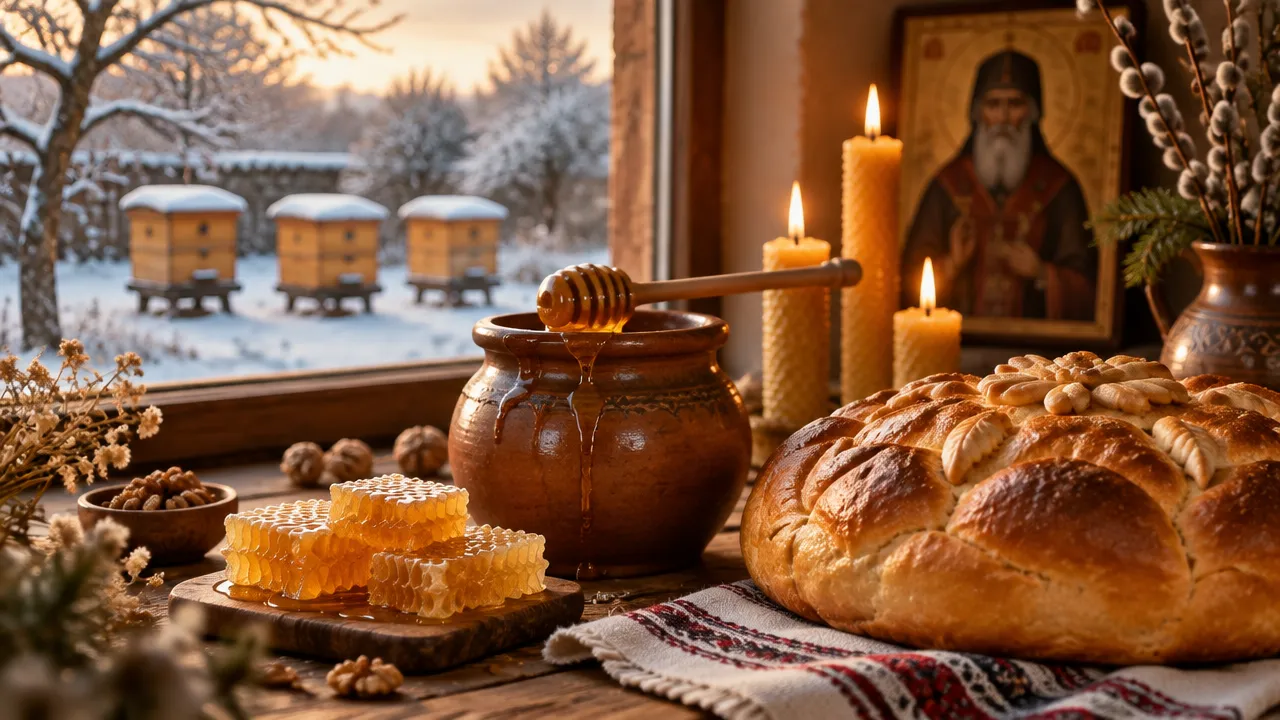
The best-known custom is the blessing of honey. Worshippers bring honey to church, then keep it at home after the service as a traditional remedy.
Another custom involves making pitki, small loaves of bread. These are spread with the blessed honey and shared with neighbours and loved ones, linking the church observance with a tradition of giving food.
Beekeepers regard St Charalambos as their patron saint. In many places, the holiday is an occasion for gatherings and honey exhibitions.
Who celebrates a name day
Haralampi, Haralampiya, Lambi and people with related names celebrate their name day on this date—a celebration associated with their given name. This personal observance shares the date with the church holiday.