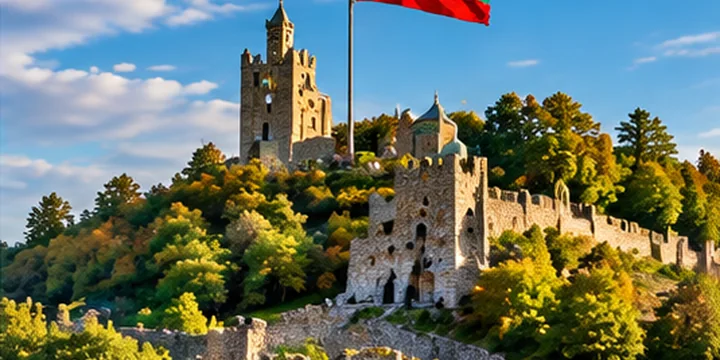
The capital’s celebration
Sofia celebrates its city day every year on 17 September, the feast day of the holy martyrs Faith, Hope and Love and their mother, Sophia. The celebration was established by a decision of Sofia Municipal Council in 1992.
The city takes its name from the old Saint Sophia Basilica, whose name means “Holy Wisdom”. The capital’s motto, “It grows, but does not age”, reflects the connection between its long history and its continuing growth.
Events and working-day status
The day begins with a ceremonial liturgy. Sofia Municipality presents the Sofia Award and confers the title of Honorary Citizen of Sofia. Concerts, exhibitions and free events also take place across the city.
Sofia City Day is not a public holiday: it is a normal working day in Bulgaria. The capital’s celebrations therefore do not mean a national day off.
The city and its name
Sofia is one of Europe’s oldest cities. In antiquity, it was home to a Thracian settlement of the Serdi, followed by the Roman city of Serdica. According to tradition, Emperor Constantine the Great called it “my Rome”.
During the Middle Ages, the city was known as Sredets. The name Sofia became established from the 14th century onwards, taking its name from Saint Sophia Basilica, which still stands in the centre today.
On 3 April 1879, the Constituent Assembly chose Sofia as the capital of liberated Bulgaria. Since then, the city has been the country’s political, cultural and economic centre.