A day for healing herbs
Enyovden falls on 24 June every year. On the same date, the church celebrates the Nativity of Saint John the Baptist. In the Bulgarian folk calendar, Enyovden is associated with the summer solstice and is traditionally considered the best day to gather medicinal herbs.
According to folk belief, herbs have their greatest healing power on this day. This connection between summer, plants and health lies at the heart of the holiday’s customs.
Dew, wreaths and summer rituals
Traditionally, women go out before sunrise to gather herbs. Folk belief calls for 77 and a half herbs: one for each of 77 illnesses, with the remaining “half” for an illness that has no cure. People bathe in the morning dew for health, while some watch the sunrise because the sun is said to “dance” on Enyovden.
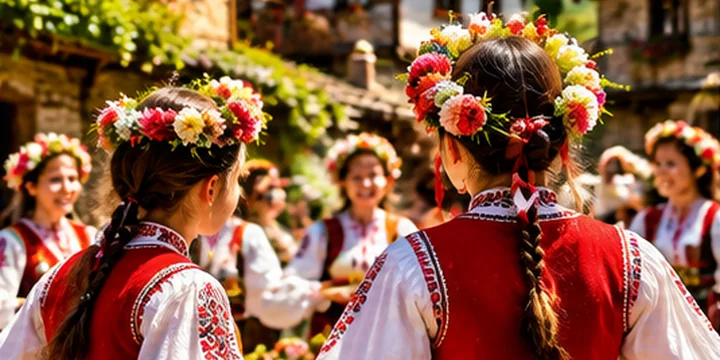
Young unmarried women make an enyova kitka, a bunch of herbs, or a herbal wreath. They place their rings among the herbs and tell fortunes at night about their future husbands.
Some regions also have the custom of enyova bulya, in which a little girl dressed as a bride goes around the fields and blesses the crops.
Enyovden in Bulgaria today
Enyovden is not a public holiday: it is a normal working day in Bulgaria.
Many people still collect herbs for tea around 24 June, and herb festivals are organised in the mountains. The day is also a name day for people called Enyo, Encho, Yanko, Yana, Ivaylo and related names.