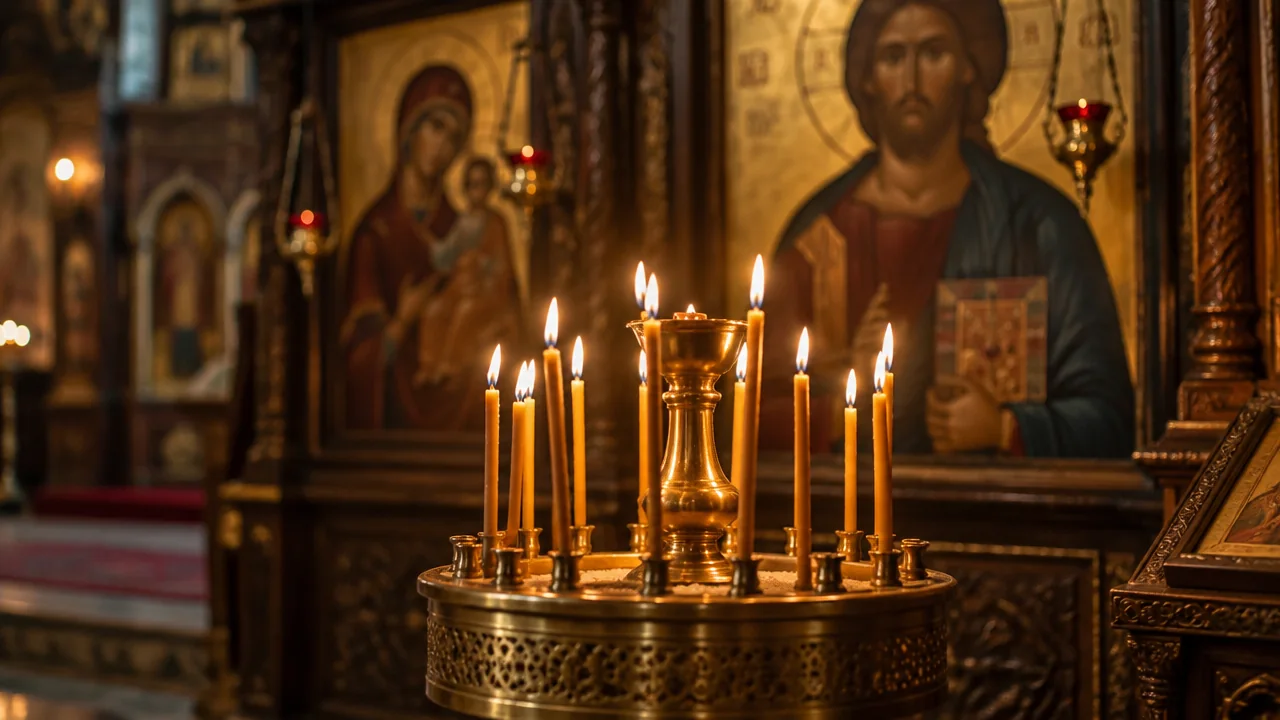
The Prophet Elijah
On 20 July each year, the Orthodox Church honours St Elijah, one of the most revered Old Testament prophets. The Bulgarian name for the feast is Ilinden.
According to the Bible, Elijah stopped the rain for three years because of the people’s sins. At the end of his life, he was taken alive into heaven in a fiery chariot.
Folk Beliefs and Customs
In Bulgarian folk belief, St Elijah controls thunder, lightning and rain. Traditionally, people avoid working in the fields on Ilinden for fear of being struck by lightning or having their crops hit by hail.
In many villages, the day is marked with a kurban, a ritual animal sacrifice followed by a communal feast. A rooster or lamb is slaughtered, and the meal takes place on high ground or beside a chapel dedicated to St Elijah. Such chapels stand on many hills across Bulgaria.
The Uprising and the Two Dates
The holiday is also linked to the Ilinden–Preobrazhenie Uprising. The Ilinden Uprising in Macedonia was proclaimed on 20 July 1903 under the old calendar, corresponding to 2 August under the new calendar.
This calendar difference explains why the uprising’s anniversary is commemorated on 2 August, while the church feast of St Elijah remains on 20 July.
Working Day and Name Days
St Elijah’s Day is not a public holiday: it is a normal working day in Bulgaria. The traditional avoidance of fieldwork is a folk custom, not a day-off rule.
It is also a name day—the celebration associated with a person’s given name—for people named Iliya, Iliyan, Iliyana, Ilka, Ilko and related names.